Interview with Suspense Author CJ West


CJ West is the independent author of a host of suspense novels, including The End of Marking Time and The Winemaker’s Son. His most recent release is The Cat Bagger’s Apprentice.

CJ spent twenty years helping companies solve computer networking and information management problems with firms including Arthur Andersen. In 1999, he began writing suspense novels and several years later transitioned to writing fulltime.
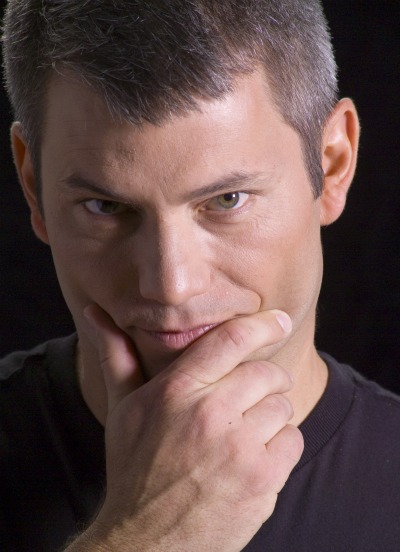
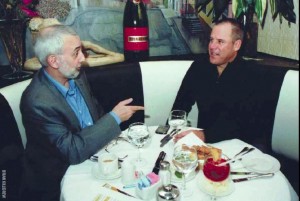
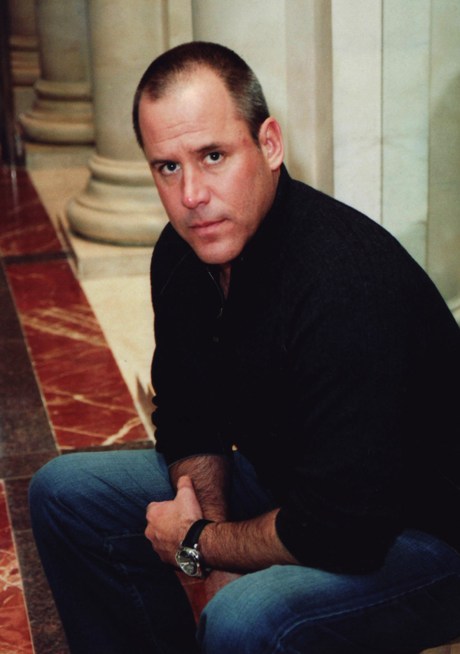
Suspense author CJ West

Suspense author CJ West

His fiction puts everyday people into intense situations and forces them to consider how they came to be who they are. He enjoys exploring the world through his research and varies his stories to follow his curiosity.

The Winemaker’s Son, the first book in CJ’s Randy Black series, was optioned for film by a screenwriting firm in early 2008. The screenplay, written by Marla Cukor, is complete, but has not yet made it to the big screen. Black Heart, the second book in the series, offers a major twist in the storyline and challenges readers to forgive Randy Black’s mistakes and follow his journey in future novels. Gretchen Greene, the third Randy Black novel, introduces the first in a series of characters Randy will be tasked with saving. CJ’s latest standalone thriller, The End of Marking Time, was published in 2010.

CJ hosts a Blog Talk Radio show called “The Thriller-30” where he interviews contemporary thriller and suspense writers. Find more information at this site. He maintains a blog, and you also can find him at on Facebook.

***

The Vigilante Author: Welcome, CJ. Let’s cut right to the chase and have you first tell us about your most recent book.
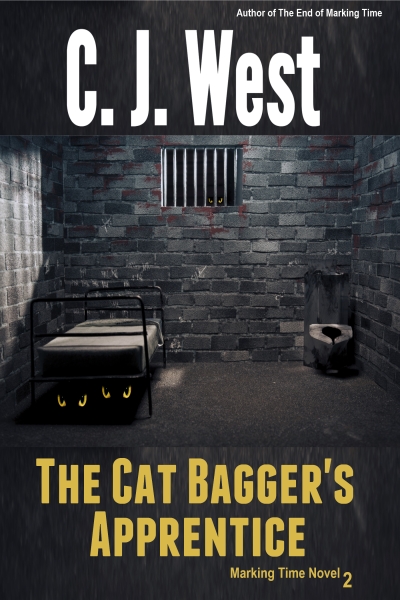
Cat Bagger's ApprenticeCJ West: The Cat Bagger’s Apprentice is the second book in my “Marking Time” series, set in a time shortly after prisons were abolished. The book focuses on one criminal and the interplay between him and a cast of characters that are trying to rehabilitate him. The challenge to those in criminal justice is to protect citizens and help inmates without the benefit of prison bars. The counselors must use psychological ploys to maintain control in a world where control is nearly impossible.

The Vigilante Author: Okay, I’ll bite: What is a “Cat Bagger”?

CJ West: For readers of The End of Marking Time, the Cat Baggers have a special meaning. It is unclear whether this group is mythical, created to scare criminals, or if it is real and their activities are being covered up. The Cat Baggers are the remedy of last resort. They are said to torture criminals until they are so desperate to escape that they jump to their deaths. The threat of being sent to the Cat Baggers is so scary that criminals do whatever they are told to avoid that sentence.

They are called Cat Baggers because one of their early methods of torture was to bind and blind a convict, then rile up a bunch of feral cats (in a bag) and release them into the convict’s room.

The Vigilante Author: I could nominate a few real-life candidates for such treatment. But moving on: How would you characterize your fiction, by genre, themes, or topics?

CJ West: So I can’t just say “awesome”?

The Vigilante Author: That goes without saying. But tell me more.

CJ West: I write suspense, but I’ll write about any theme that catches my interest, and that means the tones of my books vary pretty widely. I’ve written an intense revenge story, a devious psychological thriller, and one book that’s not sure if it’s romance, suspense, or sci-fi. My loyal readers expect a few very creative surprises in each book and a heavy dose of realism.

The Vigilante Author: What’s cool about self-publishing is that a creative person like you doesn’t get stuck in some publisher’s genre box. You can experiment and go wherever your imagination takes you. So, how did you become a creative writer? Tell us something about your early life.
Marking TimeCJ West: I wouldn’t trade my family life for anything, but I was a fish out of water in some respects since I was ten or eleven. I was raised a country boy. I learned to shoot and track animals as a kid. We spent a lot of time fishing, hunting, and building things because my father worked with his hands and that was the “real world” to him. I’m one of those people who, with a shotgun, a knife, and some matches, could wander off and survive in the woods for months. Those skills won’t really be valuable until the zombie apocalypse, but hey, you never know.

The Vigilante Author: Indeed. I expect zombie hordes to be unleashed any time from Washington, D.C. But please continue.

CJ West: When I was about ten, I was identified as a gifted kid. We lived in a tiny town where the school system didn’t know what to do with me other than accelerate my progress toward graduation. It’s hard to believe now, but I was one of the smallest kids in my class until sophomore year in high school. Because I was so small, my parents didn’t want me promoted early, so I stayed with my peers and was pretty much left alone by my teachers. I started writing a book in sixth grade because I was extremely bored in class and that started me on the road to learning and doing things myself. Sometimes I wish I had better mentors in those years, because learning to seek good advice would have saved me lots of heartache and head-banging through the years.

My father didn’t value education and I was tracked into a vocational high school so I could get a job when I graduated. This was probably one of the biggest mistakes of my life, but it led to a career in information technology, which I thoroughly enjoyed.

The Vigilante Author: Yet somehow you developed an interest in fiction. How did that happen?

CJ West: I began reading for enjoyment in the 90’s, something that wasn’t done in my house, certainly not by men. In 1999 I picked up a few books on writing and fell in love with crafting stories. Years later I realized that I had worked on a writing project every single day for seven years. I truly love writing fiction and if I had my choice of work each day, that’s what I would do.

I became a writer completely by accident. I was looking for a hobby on Christmas and stumbled on an addiction without a cure. I love writing and can’t imagine a time in my life when I won’t write novels. My earliest influence was Douglas Preston and Lincoln Child. I really admire the monsters and villains they create.

The Vigilante Author: Anyone else?
Winemakers SonCJ West: Tim Hallinan has been a great influence on me. He’s an amazing writer, who crafts prose better than any suspense writer I’ve read. Tim, and Michael Connelly, impressed me with their kindness. Their kindness and support of new writers is a great example to try and live up to.

The Vigilante Author: I’ve had that same kind of good fortune, with encouragement from writers like Brad Thor, Lee Child, Stephen Hunter, and the late Vince Flynn. So, what exactly motivates you to write, CJ? Do you have any overriding goal?

CJ West: I write for the joy of writing. I don’t need motivation to write; what I need is motivation to put the writing aside and deal with marketing and other things that need my attention. As far as my goal in writing, I have an innate drive to help people. It permeates everything I do, and I often see myself redeeming characters in my work, or writing unlikeable characters in a way that readers become attached to them.

The Vigilante Author: What kind of obstacles and challenges have you faced?

CJ West: My biggest obstacle is that I’m lousy at marketing. Once I convince a reader to pick up The Winemaker’s Son and The End of Marking Time, I have a new friend. My problem is that I don’t accomplish that feat nearly enough. Maybe I should spend more time doing it.

The marketing that I do is fun. Maybe it should be more sales focused, but I’m not a salesy guy. My most recent marketing program is a Kickstarter campaign that offers readers a chance to follow along as I write my next novel, Two Bags Full.

The Vigilante Author: I think that’s really clever, outside-the-box thinking. Tell us more about that project.

CJ West: Glad to. Kickstarter is a website that helps creative people fund new projects. My Kickstarter not only funds the production of my new book, but it also funds the creation of a group where I’ll share the book from the very earliest stages of development. Readers can read along as the book is written and ask me questions about the story or characters. I’ll share my tools and the techniques I use to keep a new book project on track from beginning to end.

Some writers think I’m crazy for sharing my work as it is written, but I feel like this is a great way for readers and new writers to see how the process (at least mine) really works.
Gretchen GreeneThe Vigilante Author: That’s a terrific way to build a bond with your fans. It’s something like what super-successful indie author Hugh Howey does. And another bestselling author friend, Michael J. Sullivan, has recently had great success with his own Kickstarter campaign.

Tell me a bit about your writing methods. I’m both an outlier and an “outliner.” I’m OCD about outlining and planning in advance. Maybe it’s insecurity and I’ll outgrow it, but I have to figure everything out in advance of writing. What about you?

CJ West: My writing process is evolving. I used to outline, but now I plan a little then jump off and write. Experience has made me more comfortable with the process and I don’t have a nagging fear of getting lost. At least not most days.

The Vigilante Author: If I were from the NSA and bugged your office with a hidden video camera, what would I see?

CJ West: My kids often laugh at me while I’m working because I pay attention to small details and act them out so I can get them right. I’ll stand in a doorway, or move my hands, or do any number of other strange things so I know how to describe the actions of my characters.

Other than that quirk, and a lot of talking to myself, I sit at my computer and write. A lot. I’m not a very fast writer, so I spend a lot of time in my chair.

The Vigilante Author: That’s funny; same here. At times, I march around the house, probably with a vacant look in my eyes, mumbling bits of dialogue or talking aloud to work out plot points. But this will be just our little secret, okay?

What do you love best about the writing life? And what about it is hard for you?

CJ West: My favorite part of writing is the blank page. I love dreaming about something new and plotting out a new book. I am happiest on the day that a new book is finished and I start the next. I’m so excited about the next project I want to move on and immerse myself in the new world I’m creating.

There are two hard things for me in the writing life. First, I don’t enjoy polishing a book for print. I don’t like to fret over typos and punctuation. Second, I’m not great at approaching people and selling my work. I always feel like it is an imposition.

The Vigilante Author: It truly isn’t — not if you think of yourself as a “trader,” not a taker. And you give your readers an awful lot of pleasure, so I wouldn’t sweat it.

Anyway, you decided to self-publish rather than traditionally publish. Why was that?
Black HeartCJ West: I know a lot of people who tried really hard to publish and I admire them for the effort. I never really tried. I came into writing as a hobby and didn’t get serious about it until strangers started raving over my first book. When I received a film option for The Winemaker’s Son, I decided to get serious about my writing, but by that time I was already a self-publisher and that’s where I decided to stay.

The Vigilante Author: After all this time, you probably have some opinions about the kind of qualities you think are most important for any would-be writer.

CJ West: I think the most important thing for a writer is the ability to tell a good story. A lot of writing is technique, structure, and tools that can be taught. Creativity and imagination are a must. That’s not to say this business is easy for a creative sort. It takes a ton of hard work and dedication, but for someone who loves telling stories, it’s not really work.

The Vigilante Author: Agreed. Now, tell us where people can find your books, and how they can contact you.

CJ West: My ebooks are available at Amazon, and my print books are available in any bookstore by presenting the ISBN and asking to order the book. Readers can find me at my website, my blog,  or on Facebook. I’m always glad to answer questions.

The Vigilante Author: Thanks so much, CJ. I hope this interview prompts many new readers to check out your work.

***
Posted in Author profiles, Inspirational, Interviews, Marketing Advice, Publishing Advice, Self-Publishing, Traditional publishing, Writing Advice | Tagged , , , , , , , , , , , | 6 Comments

Fictional Heroes and Personal Transformation


Here is a new essay by me, published online for the first time at The Atlasphere. It presents the reasons — now backed by empirical psychological studies — why fictional heroes provide us not “mindless escapism,” but are actually important elements for our personal psychological change and growth.

I post this message here today in honor of the late Vince Flynn, whose fictional hero Mitch Rapp has given millions of readers like me a model of personal courage and principled inspiration.

Posted in Essays, Inspirational, Vigilante fiction | Tagged , , , , , , , , , , , , , , , , , , , , , , , , , , | 2 Comments

Vince Flynn, R.I.P.

Vince-Flynn-seated-at-pillars

Vince Flynn, after my interview in late 2007. Photograph (c) by Brian Killigrew.


I’m devastated to learn, and saddened to report, that Vince Flynn — one of my all-time favorite thriller authors, and one of my all-time most-admired people — has just died at the tragically young age of 47.

If there is a Valhalla for life’s great and noble warriors, Vince Flynn deserves to occupy the throne there.

Vince was a bestselling giant in the thriller field. But he was much more: a devoted husband and father, a man of principle and courage, and a ferociously dedicated American patriot. All of these elements of his character were embodied in his many thrillers, and in his iconic fictional hero, Mitch Rapp.

Over several recent years, Vince bravely battled prostate cancer, yet still continued to write through horrific pain and debilitating physical deterioration. In recent months, he kept the late stages of his battle private from us all, never letting on publicly that things were getting worse. Indeed, his latest monthly newsletter, issued in May, gave no hint of his dire circumstances. Instead, he took that occasion to announce the scheduled fall 2013 publication date of his next Mitch Rapp thriller, titled — ironically — The Survivor.

Vince Flynn filled his all-too-brief years with more life than most of us will ever know, fulfilling many dreams the rest of us would never dare, and inspiring countless others by the courage of his example. I proudly count myself as one of those who was so inspired.

I had several opportunities to meet Vince, first at some of his public book signings. Then he did me the great honor to let me interview him for the March 2008 issue of The New Individualist magazine. That interview, which I have reprinted here in three parts on this blog, reveals why this man was so extraordinary — and why I shall miss him so very much.

Well done, Vince. Well done.

Bidinotto-interviewing-Vince-Flynn-300x201

Vince and me during our interview. Photo (c) by Brian Killigrew.

UPDATE: Among the many glowing tributes to Vince over the past 24 hours, I think that this remembrance, by veteran journalist Claudia Rosett, is particularly relevant to readers here. Rosett focuses on the qualities in his Mitch Rapp protagonist that make him an archetypal vigilante hero: his willingness to stand alone for justice, even in the face of laws and the enormous powers wielded by corrupt government officials. As Rosett’s fine piece makes clear, Vince Flynn was a true “vigilante author” — perhaps the best and most successful of our era.

UPDATE #2: I just posted this personal video tribute to Vince Flynn on a Facebook page established for that purpose tonight. It’s amateurish…but heartfelt. Perhaps it captures just a bit of what I loved about Vince as a writer, and even more as a man.


Posted in Announcements, Author profiles, Inspirational, Interviews, Vigilante fiction | Tagged , , , , | 10 Comments

Some Terrific Reviews of the HUNTER Audiobook


Audiobooks rarely attract as many reviews as do ebooks and print editions. That’s why I’m so pleased to report that veteran audiobook reviewer Kathy Golden just gave the HUNTER a-book a terrific review on her “Just Audiobook Reviews” website.

Another regular reviewer also recently gave the HUNTER audiobook an enthusiastic review on her “Martha’s Bookshelf” blog.

I especially appreciate the praise these reviewers heaped upon the performance by my narrator, Conor Hall, who did such a creative interpretation of the story and the character voices. I’m glad this talented young man is getting this kind of attention for his exceptional work.

Once again, check the right-hand column of this page, under the cover image of the book, for links to where you can listen to a sample or purchase the audiobook.

Posted in Audiobooks, Book samples, HUNTER: A Thriller, Reviews, Self-Publishing | Leave a comment

Foreign Kindle Editions of HUNTER


A notice to those of you who live outside of the United States:

The Kindle ebook edition of HUNTER is available not just in the United States, but also on the individual national Amazon sites in the U.K., Canada, Germany, France, Italy, Spain, Japan, India, and Brazil.

Not all of these sites publish the many customer reviews of the book that you can find on the U.S. Amazon site; but HUNTER is available for purchase and downloading from any of those separate Amazon/Kindle sites. And on each page, you can read a sample of the novel prior to deciding to purchase it.

Posted in Announcements, Book samples, HUNTER: A Thriller | Tagged , , , | Leave a comment

HUNTER Audiobook Milestone


Friends, I recently sold my 1,100th HUNTER audiobook!

I’m still astonished that the audio medium has worked so well for my thriller. It certainly makes me glad that I produced it.

For you many audiobook fans, the novel is available on Audible.com, iTunes, and Amazon; check the right margin of this page, right under the book cover image, for the respective links. And you can hear an audio sample by clicking this link, then clicking the “sample” button below the cover image.

Posted in Announcements, Audiobooks, Book business, Book samples, HUNTER: A Thriller, Self-Publishing, Vigilante fiction | Tagged , , , , , | 3 Comments

Vigilante Author — or Cultist?


The publishing industry’s image of indie authors?

I am a cultist.

At least, that’s what a guy writing in Salon implies. But no, not for my individualist politics or philosophy.

Only because I’m a strong proponent of self-publishing.

“Self-Publishing Has Become a Cult,” his article declares.

Yes. Really.

“Last year I self-published a novella, and all it did was encourage me to get an agent and seek a traditional deal for my full-length novel,” gripes one Rob W. Hart. After explaining that his little 20,000-word book has sold only about 200 copies to date — which he insists was enough to satisfy him — he continues:

“Yet, not for a second did I consider self-publishing my [next] full-length novel. The goals here are different: I want this book in bookstores. I want the cachet that comes with getting a traditional publishing deal. I want to get invited to better parties.”

Now, despite the semi-ironic tone (like saying, “I wanna be on the cover of the Rolling Stone — tee-hee!”), I think he’s actually being serious, because he offers no other motive anywhere in the piece. He seems to crave Official Publishing Establishment Validation. Which, to me, is sad.

Mr. Hart goes on to say that he really wants to become a “hybrid” author — that is, one who seeks a mix of traditionally published and self-published arrangements for his various works. But then he spends paragraphs grousing that advocates of self-publishing despise and denounce writers who seek such a hybrid career.

For the record: I think a “hybrid” publishing career is a perfectly legitimate option for a writer. In addition, I don’t know of any self-published author who mocks writers who take that path. In fact, I don’t know of any self-published author who ridicules or despises those who have found success in traditional publishing, either.

Succeeding professionally as a writer is a terribly difficult career path, and I applaud anyone who has the fortitude and talent to find any way to do it — whether his vehicle is traditional publishing, self-publishing, or hybrid publishing…or whether his medium is print books, ebooks, audiobooks, or parchment scrolls.

It all depends on your personal goals. I have writer friends (for instance, J.Carson Black) who began with traditional publishing, then moved to self-publishing because they thought it offered better financial and contractual terms. I have other writer friends (for instance, Michael J. Sullivan and Hugh Howey) who have achieved super-success first by self-publishing, but who then shrewdly parlayed their fame into select, carefully tailored deals with big publishing houses, which allowed them to expand their fan base to include bookstore customers, while still retaining most of their other rights. And I also have author friends (for instance, Brad Thor) who have achieved phenomenal success solely through traditional publishing.

There is nothing inherently wrong with any of these arrangements. The objective for the author, in all cases, is to find and connect with his target audience of readers. Everything between the author and his readers is either a means to that end, or an obstacle. A “Big Six” publisher, a small press, or a printer/distributor that offers self-publishing services…those are merely options to achieve the end of reaching readers; and, depending on your priorities and goals, they can be either better- or worse-suited for that purpose.

Yes, for the overwhelming majority of writers, I enthusiastically advocate self-publishing, and I’m unapologetic about it. For most, it offers far better money, plus guaranteed publication, much faster publication, a flexible pace of publication, faster royalty payments, retention of all rights, total control over production and marketing, creative freedom, and endless time to find one’s audience.

However, self-publishing is not for everyone. It does not offer you much (if any) bookstore distribution, so you’ll miss reaching those customers. Also, self-publishing doesn’t guarantee you any up-front advance against royalties. It requires that you either learn or hire people to do the various tasks of production, distribution, and marketing — things that publishers do offer writers.

And, of course, a traditional publisher’s acceptance of your manuscript will bestow upon you Publishing Industry Validation!!! — if you are so insecure that that matters.

Again, it all depends on what you want, and which of these things are your highest priorities.

But self-publishing is no more a “cult” than is traditional publishing. Arguably, the latter — which operates more like an exclusive club, admission to which is akin to enduring the rites of a fraternity initiation — should be more vulnerable to the “cult” label.

Anyway, why do I get the feeling from Mr. Hart’s defensive tone that he feels the need to justify his own choice…or perhaps the motives for it?

Posted in Book business, Essays, Humor, Publishing Advice, Self-Publishing, Traditional publishing | Tagged , , , , , , , , , , , , , , | 4 Comments

Presentation on Self-Publishing


REPEATED: FOR READERS AND WRITERS NEAR ANNAPOLIS AND MARYLAND’S EASTERN SHORE:

I’ll speak on “How You Can Succeed as a Self-Published Author,” on Thursday, May 30, 7-9 p.m., at Queen Anne’s County Free Library, 121 South Commerce Street, Centreville, Maryland. My informal presentation is free and open to the public.

I’ll outline the main publishing options available to writers, compare their relative advantages and disadvantages, explain why I chose self-publishing, and explain how that works. I also plan to chat a bit about my debut thriller, HUNTER, explain what I did to propel up the bestseller lists, answer questions about why and how I write what I do…and also about why BAD DEEDS has taken so long!

I look forward to meeting any of you who attend. Copies of HUNTER will be available for purchase, and I’ll be happy to sign and personalize copies for you or any gift recipient.

I hope to see you there!

UPDATE: The event was a satisfying success. We drew an audience of eager writers who took copious notes and asked lots of questions. Many thanks to the Centreville Free Public Library and librarian Erin Neusbaum for their kind hospitality!

Posted in Announcements, Book business, Events, HUNTER: A Thriller, Marketing Advice, Personal Appearances, Publishing Advice, Self-Publishing, Traditional publishing | Tagged , , , , | Leave a comment

Why Do Liberals Reject Vigilante Fiction?


I had missed this essay by Anthony Paletta when it first appeared in February 2012, but it raises a question that the author answers with some good insights — especially near the end:

Why do people on the political left hate vigilante films (and I would add, vigilante fiction generally)?

Now clearly, it isn‘t that leftists reject violence in movies. Despite their typically harsh condemnations of private gun ownership and use, liberals historically have been transported to rhapsodic heights of praise for, and heap loads of Oscars upon, many violent films — from “Bonnie and Clyde” to “Dog Day Afternoon” to “Silence of the Lambs” to “The Godfather” (and many other gangster films) to anything by Quentin Tarantino, and on and on.


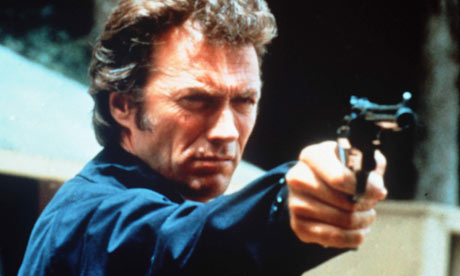
"Dirty Harry" Callahan -- the vigilante icon liberals love to hate

“Dirty Harry” Callahan — the vigilante icon liberals hate

Yet go read some of the same critics’ older reviews of films like “Dirty Harry” and “Death Wish,” or of more recent ones like “Harry Brown” or “The Brave One,” and you’ll see that progressive reviewers simply can’t restrain their vituperation — often even casting these films in political-economic terms, as “fascist” (which reveals their sad ignorance of political and economic definitions, as well).

So, what’s really going on here?

The violent films that progressives prefer typically blur moral distinctions between heroes and villains, between criminals and victims — and simultaneously shower pity and “understanding” on the perpetrators of criminal violence. Nor is there a whiff of protest against “vigilante violence” in their reviews and commentaries when the targets of that violence are the Politically Incorrect — as in Tarantino’s recent “Django Unchained,” or in the old Seventies film “Billy Jack,” or in countless other movies that target racist bigots, unscrupulous capitalists, despoilers of The Environment, etc. Similarly, outstanding thriller authors Lee Child and Barry Eisler, both of whom tilt to the political port side, get away with plenty of visceral vigilante violence in their novels; yet they still retain the approval of liberal critics and readers, solely because of their Politically Correct targeting.

No, the objects of liberal wrath are only those vigilantes who uphold actual justice — not “social justice” (which is its progressive counterfeit). Actual justice is rooted in the individualist premise of personal self-responsibility for one’s actions. “Social justice” is the inverse: It is rooted in the premise that no individual is, or should be held, morally responsible for his actions. In movies upholding the former premise, criminals are brought to account for the evil that they choose to do. In movies upholding the latter premise, criminals are viewed as helpless victims themselves, driven to acts of violence by forces beyond their personal control.

That is why, in contrast to the violent films that liberals like, the ones that they hate draw clear moral boundaries between good and evil and establish a zero-tolerance policy for the evil. But, in a breathtaking lapse of logical coherence and consistency, liberals simultaneously do hold unforgivably accountable those who reject their moral Narrative — the liberal worldview — often gloating when those characters are subjected to the most vicious, violent retribution for their philosophical apostasy.

In a previous essay, I make clear that I do not endorse actual vigilante law-breaking. I explain why what may be satisfying, even morally instructive, in fantasy would be very bad practice in the real world.

But, as a writer of vigilante fiction and of nonfiction that rejects liberal, deterministic excuse-making for predatory violence, I think you may find Paletta’s piece to be morally instructive, too.


Posted in Essays, Reviews, Vigilante fiction | Tagged , , , , , , , , , , , , , , , , , , , , , | 2 Comments

HUNTER is Flying High…


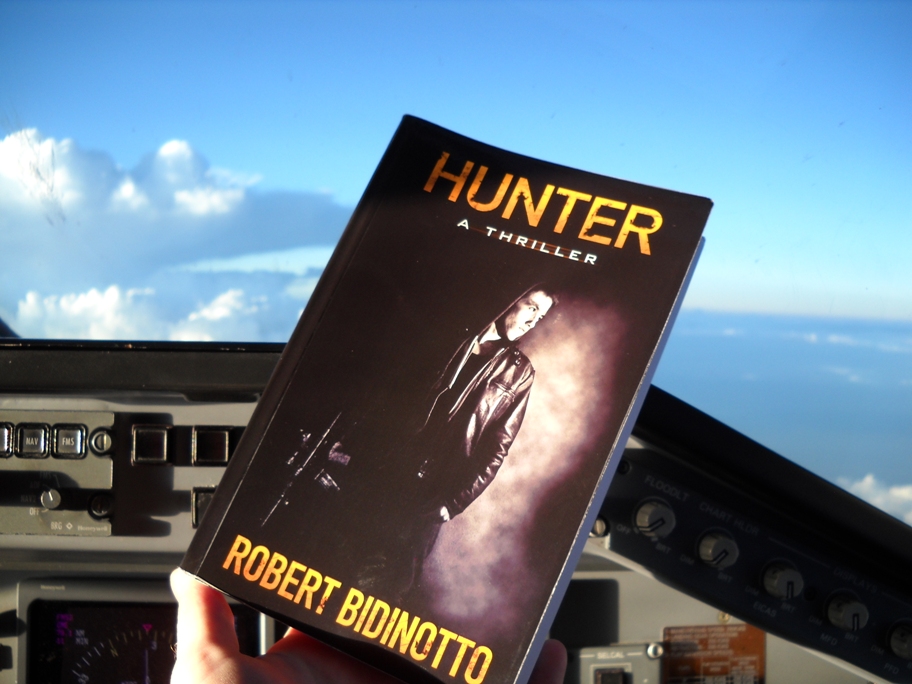
HUNTER soars!

HUNTER soars!

Pilot Mike Stephenson, a fan of HUNTER, had a copy of my novel with him on the flight deck on a flight between El Paso and Denver two summers ago. And he sent along the photographic proof.

“I eagerly await the next installment,” he reports. “Keep up the good work.”

If you have an unusual photo of yourself with HUNTER, email it to me and I’ll be happy to run it here.

Posted in Events, Humor, HUNTER: A Thriller, Uncategorized | Tagged , , , | Leave a comment