Interview with Suspense Author Allan Leverone


Allan Leverone is a 2012 Derringer Award winner for excellence in short mystery fiction and the author of four novels. These include the Amazon Top 25 overall bestseller THE LONELY MILE  (StoneHouse Ink), as well as the thriller FINAL VECTOR (Medallion Press). Allan also is the author of the supernatural suspense novels PASKAGANKEE (StoneGate Ink) and REVENANT (Rock Bottom Books).

This prolific author has written three horror novellas as well: DARKNESS FALLS (Delirium Books), HEARTLESS (Delirium Books), and THE BECOMING (Rock Bottom Books). Seventeen of his dark, short fiction tales are collected under the title POSTCARDS FROM THE APOCALYPSE.

Allan lives in New Hampshire with his wife of nearly thirty years, three children, one beautiful granddaughter, and a cat who, he reports, has used up eight lives.

***

The Vigilante Author: Allan, congratulations on your prolific and successful writing career.

Allan Leverone: Thanks very much, and thank you for having me!

The Vigilante Author: I have to tell you, I marvel at your versatility as a writer. Tell us a bit about that, and about your most celebrated work to date.
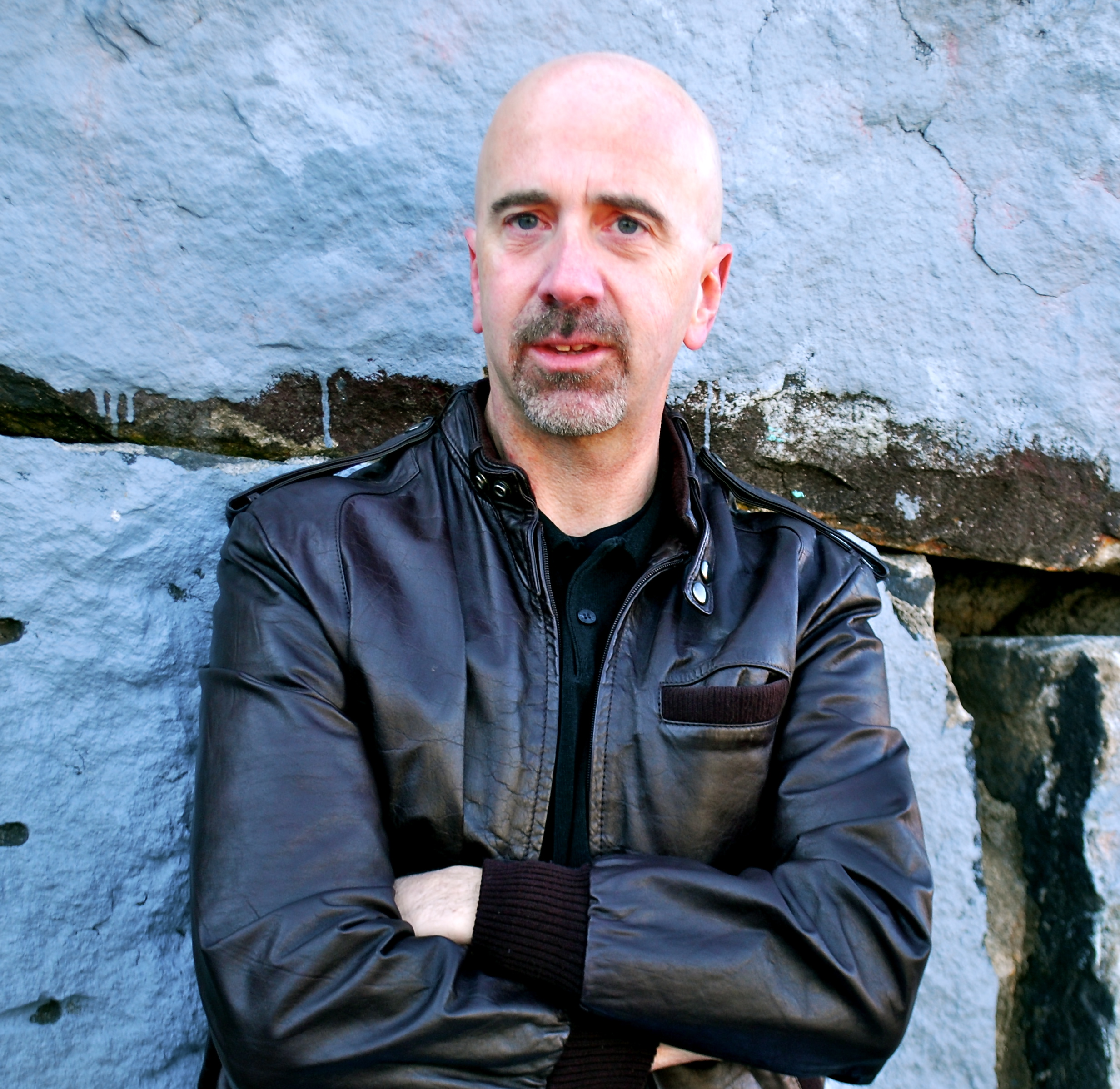
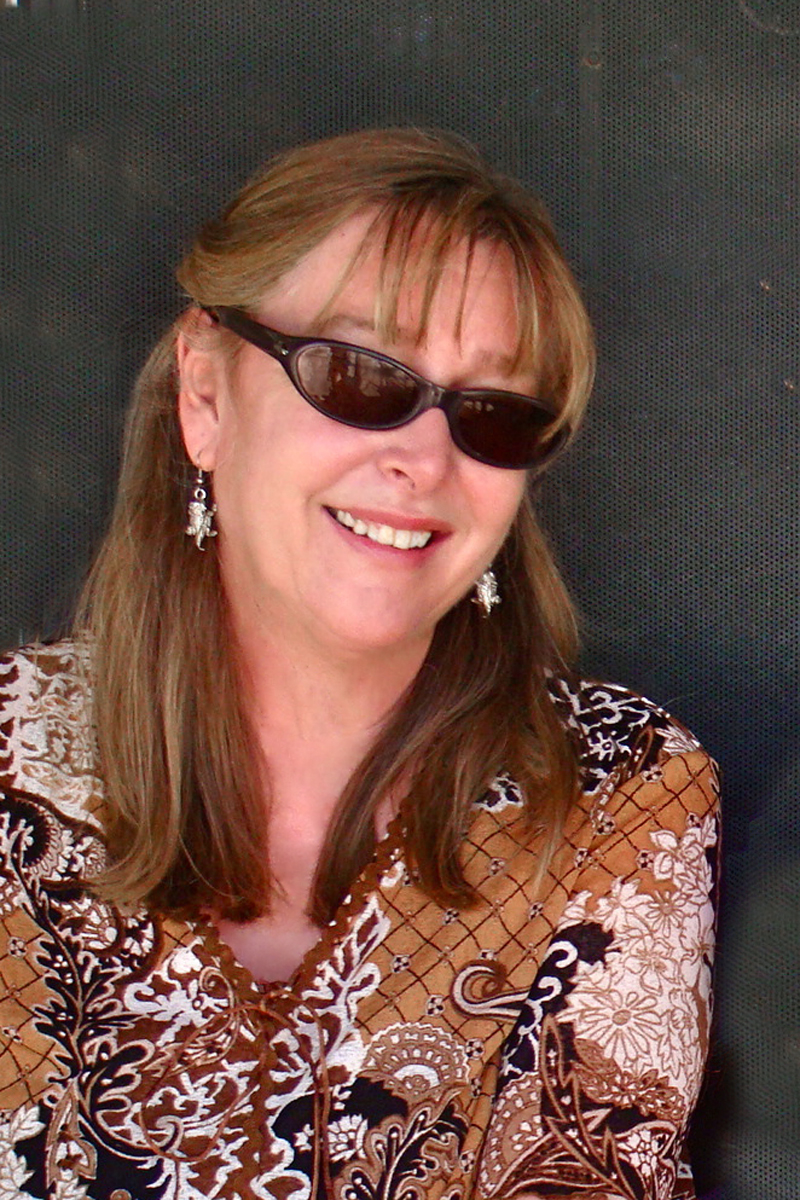
Suspense author Allan Leverone

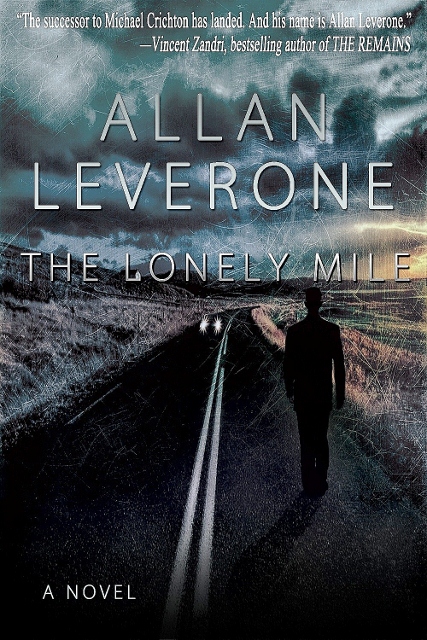
Allan Leverone: I write in a couple of different genres, but my most recent thriller is titled THE LONELY MILE, and deals with a scenario straight out of every parent’s nightmare.

Bill Ferguson is a regular guy, divorced, struggling in a tough economy to keep his two hardware stores solvent. One afternoon, entirely by accident, Bill stumbles upon the kidnapping of a teenage girl at a crowded highway rest stop. He reacts the way we all like to think we would, stepping in and breaking up the kidnapping, saving the girl. But the kidnapper manages to escape in the confusion.

Days later, when Bill’s seventeen-year-old daughter, Carli, disappears, he knows he has been targeted for revenge by a sadistic sociopath. Now he must decide just how far he’s willing to go to save his only child. And there may be more factors at play than he realizes…

The Vigilante Author: Yikes! As a father and grandfather, you’re touching sensitive nerves. Anyway, as I say, I admire your versatility as a cross-genre author. Is there a unifying thread running through your work?
Allan Leverone: I love suspense. I write horror novels and short fiction in addition to thrillers, and the one thing that ties all of my work together—hopefully—is that element. Someone will be in jeopardy and something important, often lives, will be at stake.

I write fiction I would want to read, and as an avid reader, I believe there’s nothing cooler than reading late at night, knowing you need to get to sleep right this minute because you have to get up for work the next day, but not being able to put the damned book down! That kind of reaction from the reader is what I aim for in my work, the sort of visceral need to know what’s going to happen. It’s up to other people to decide whether I’ve succeeded, but that’s my goal every time I start pounding on the keyboard.

The Vigilante Author: Well, you’ve garnered plenty of acclaim from readers and reviewers, and racked up a lot of sales, too. So I’d say you’ve succeeded.

How did you get started in this crazy business, anyway?
Continue reading

Posted in Author profiles, Biographical, Book business, Inspirational, Interviews, Marketing Advice, Publishing Advice, Self-Publishing, Traditional publishing, Writing Advice | Tagged , , , , , , , , , , , , , , , , , | 3 Comments

Upcoming personal appearances, Oct. 29-31

This coming week, while Hurricane Sandy clobbers Maryland’s Eastern Shore where I live, I have cleverly scheduled several book signings and a workshop on self-publishing several hours away, in central Virginia.

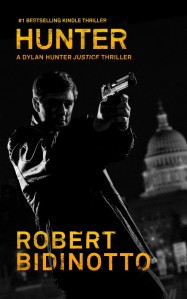
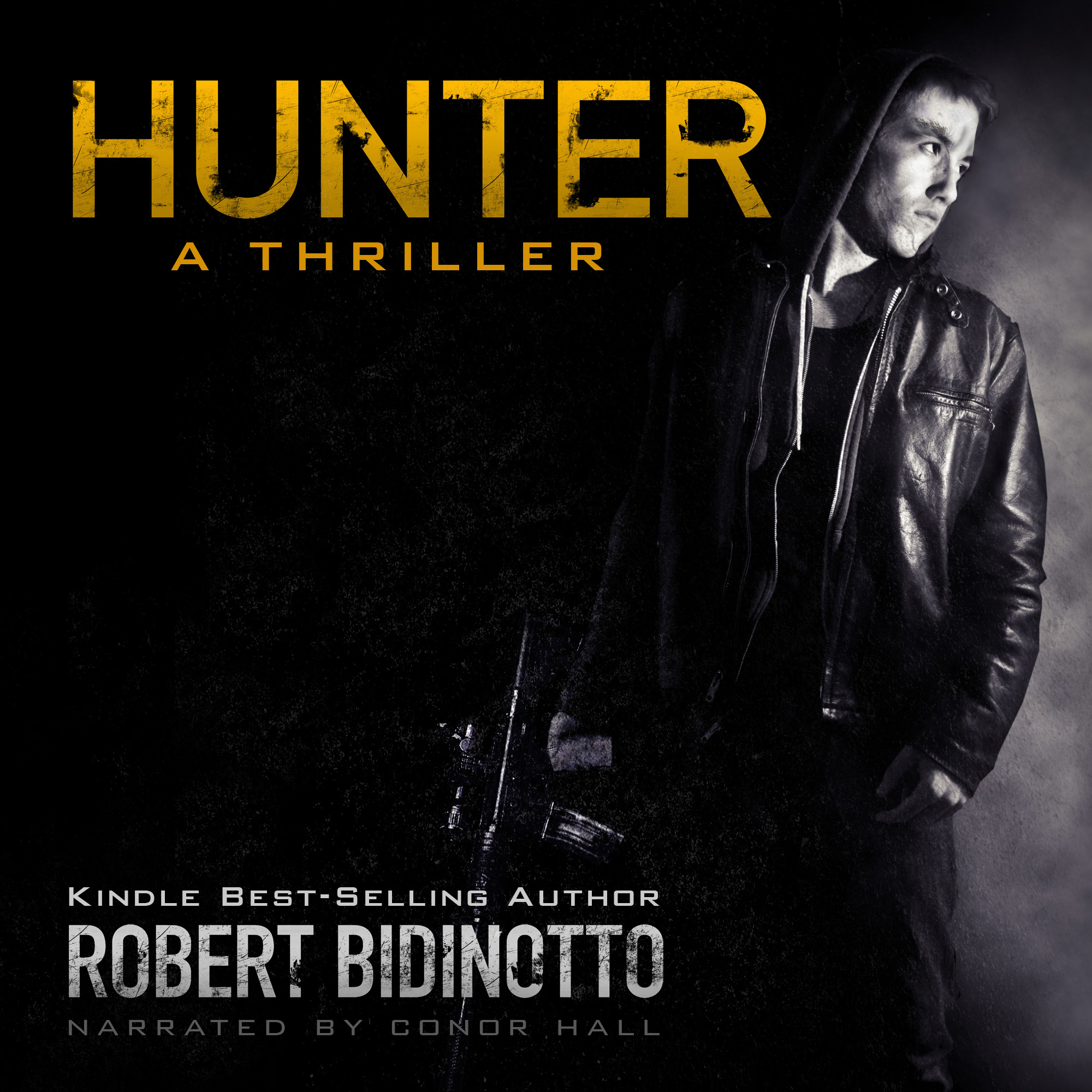
On Monday, Oct. 29, from 3:30 – 5:30 pm, I’ll be signing copies of HUNTER at the Craft Fair at the Massanutten Resort Conference Center, McGaheysville, Virginia.

On Tuesday afternoon, from 3-5 pm, I’ll be signing books at the Cross Keys Winery, 6011 East Timber Ridge Road Mount Crawford, VA (near Harrisonburg). Call (540) 234-0505 for directions and details. Here is the event listing.

Finally, on Wednesday evening, 7:30 pm, October 31, I’ll be giving a workshop on “New Paths to Publishing” back at the Massanutten Resort, in the Woodstone Building’s Ocean Room.

If you happen to live in or be traveling in that area of Virginia this coming week, I’d enjoy meeting you on those occasions. For the two Massanutten events, I believe you must be a registered owner or guest at the Resort; however, you can check for sure with the concierge desk at (540) 289-4978.

Hope to see you!

Posted in Announcements, Personal Appearances, Self-Publishing | Tagged , , , , , , , , , , | Leave a comment

HUNTER is Now Available as an Audiobook

I’m delighted to announce that HUNTER is now available as a 12-hour audiobook. Narrated by talented New York voice actor Conor Hall, the HUNTER audiobook is available on Audible.com,  on Amazon.com, and on iTunes.

At any of these sites you can listen to a five-minute sample of the story — the scene where Annie Woods meets Dylan Hunter for the first time.

Many thanks to Conor Hall for his creative characterizations and to Rob Grannis of Brick Shop Audio in New York City for first-rate sound production.

UPDATE, 9/19/2012: I’m pleased to report that the first-week sales of the HUNTER audiobook have considerably exceeded my expectations. Thanks to all of you who have purchased this edition of the book, and I hope you enjoy it.


Posted in Announcements, Biographical, Book samples, HUNTER: A Thriller | Tagged , , , , , | Leave a comment

Traditional Publishing: Today’s Vanity Publishing?


Traditional publishing has become the new “vanity publishing.” It’s a point I’ve made repeatedly during the past year, but now this excellent article elaborates on the theme.

If you’re an author holding out for the “prestige” of a traditional publishing deal, ask yourself why?

Could it be vanity?

[Oops. The broken link has now been fixed.]

Posted in Publishing Advice, Self-Publishing, Traditional publishing | Tagged , , , , , | 2 Comments

Are We “Homo Narrans”?


Are we humans Homo sapiens — or Homo narrans?

I’ve written elsewhere about the under-appreciated power of stories or “Narratives” in our lives — especially in political and social persuasion. Now, in a brief but provocative commentary, indie author Joel Friedlander argues:

No matter what realm we operate within, no matter what discipline we’ve learned or invented, storytelling has a central place.

For instance, it’s how we transmit the news of our discoveries, how we describe who we are and where we want to go, how we account for what we’ve become. In each case a personal narrative in involved. A collection of stories that taken together create a personal history all our own.

It’s a fascinating little blog post, worth reading in its entirety. However, I believe that there is a lot more to “narratives” than Friedlander suggests…and a lot more to “narratives” than we find when the term is bandied about promiscuously these days.

While it is true that all sorts of “narratives” are used to promote everything from products to politicians, I believe that there are much deeper Narratives — think of them as “meta-narratives” — that we’ve been taught since childhood. I’ve referred to them as “the Narratives that guide our lives” — the stories through which we fundamentally interpret and explain our place in the universe and society, and which objectify our values and sense of what are right and wrong actions. I believe that a canny communicator can tap into these almost universal Narratives to create messages that will resonate with millions.

The late mythologist Joseph Campbell (in his Hero with a Thousand Faces and other works) offered many profound insights about narratives in discussing the personal and cultural power of mythology. One of his most fertile insights: “Dreams are private myths. Myths are public dreams.” The link between myths (call them “basic cultural Narratives”) and dreams is vitally important to anyone who wishes to grasp how personal psychology manifests itself collectively, in society.

But I’ve always thought that Campbell’s views lacked systematic consistency and coherence. I also think that he was simply wrong about the source of our governing myths. He was enamored of Carl Jung, and like him thought that myths arose and were transmitted in the “collective unconscious” — some genetically shared legacy of tales and images imprinted in all our minds. That never made sense to me as an explanation.

I believe, instead, that the source of shared cultural myths lies in individual developmental psychology. The common, indeed unavoidable, experiences that each of us must undergo during our lives (call them life’s “passages”) constitute, I think, the basis of a shared human Quest. Seeking meaning and intelligibility, each of us casts himself as the hero in his own personal drama of growth and discovery, as he faces and overcomes challenges while seeking success and happiness. Over time, this often-tacit drama becomes deeply ingrained in our subconscious, as a private interpretive matrix and personal Morality Play that provides the context for our lives. And the most common, familiar elements of each of these private Quests serve as the shared basis for broad cultural myths. We each respond to stories about Quests because they tap into our own private experiences, affirming them and giving them broader meaning.

Whether this hypothesis is valid or not, I’m nonetheless fascinated by how Narratives affect us — and also how they might be better employed as communication tools in marketing, psychology, and politics (to name just a few obvious areas).

For writers of fiction, they are indispensable. Christopher Vogler, in The Writer’s Journey, explains how he utilizes Campbell’s theory of “the hero’s journey” in his work as a Hollywood “script doctor.” Vogler takes apart the plots of some of the most popular films of all time, showing how they fit a transcultural, ubiquitous “heroic quest” pattern — and he then shows how a writer of fiction can employ that same basic pattern to make his own work better resonate with readers.

All of which underscores Friedlander’s point about our being “Homo narrans.” Storytelling is truly fundamental to what we humans are: not just how we communicate, but more basically, how we interpret and understand the world and our places in it. This explains why readers become so passionate about certain stories and the authors who write them.

And viewed from this perspective, the social role of the artist, especially the writer of fiction, becomes far more important — and far more culturally potent — than most people ever appreciate.

Posted in Essays, Inspirational, Writing Advice | Tagged , , , , , , , , , , , , , , , | 7 Comments

Outstanding FORBES Article on Indie Publishing


A long, impressively researched article about how self-publishing is revolutionizing the publishing industry, written by marketing expert and author David Vinjamuri, has appeared in Forbes.

David interviewed and quoted me, along with a couple of friends — best-selling indie author Hugh Howey and traditionally published superstar Brad Thor — allowing us to opine about the radical changes shaking the book business, why they occurred, and what the future may hold.

It’s a great primer on the topic. Let me add a personal “thank you” to David Vinjamuri for seeking me out as an interview source for the piece. I wish him all the best on the forthcoming release of his own self-published debut thriller, Operator.

Posted in Author profiles, Book business, Interviews, Publishing Advice, Self-Publishing, Traditional publishing | Tagged , , , , , , , , , , , , , , , , , , , | 1 Comment

Interview with Thriller Author J. Carson Black


J. Carson Black is the author of three short stories and thirteen novels, including the critically acclaimed Laura Cardinal series, recently optioned by Winkler Films/Sony Television.

Since April of 2011, her books have sold over 300,000 copies.

Her first thriller for the Amazon publishing imprint Thomas & Mercer, THE SHOP, climbed to the #1 spot on the Kindle Top 100, among all books. Her latest thriller, ICON—also released by Thomas & Mercer—is another big bestseller in both trade paperback and ebook editions. And it also has inspired a live action short/music video, Vengeance.”

Known as “Maggy” to friends, this prolific, highly successful author exudes sparkling wit in conversation and correspondence. Her intelligence and charm are fully evident in this recent interview with The Vigilante Author.

***

The Vigilante Author: Congratulations on the stunning success of your novels. You have a best-selling mystery-thriller series, plus stand-alone thrillers, too. ICON seems to break new topical ground for you. What was its genesis?

Thriller author J. Carson Black

J. Carson Black: I have always been fascinated by the cult of celebrity. What’s it like to be the center of all that attention? I didn’t think I’d like it, and it occurred to me that maybe some celebrities aren’t happy with that lifestyle, either. What if they had a chance to escape?  Would they take it? Could they take it? Once you’re on the train, it’s tough to jump off.

I’m also intrigued by this idea. Some of the stars who are getting the biggest paychecks? They’re dead. On the recent anniversary of Marilyn Monroe’s death, I read a number of articles postulating what might have happened had she lived to be eighty-six. Would she have remained a big star or would she have faded into obscurity as she got older and tastes changed?

The Vigilante Author: She was still a sex symbol when she died. Hard to believe that she could’ve sustained that same level of public adulation as she got older.

J. Carson Black: She was in danger of running right smack into the Sixties, and what a culture clash that would be—Marilyn versus Janice Joplin. But now Marilyn Monroe is at top of the Dead Star hit parade, and makes millions more than she ever made in life.

When Michael Jackson was alive, he spent so much money his estate was in danger of imploding—possibly one reason he chose to go on the European tour just before his death. But now he can no longer spend money—he just makes it.

The Vigilante Author: That’s a great point, that all these pop culture icons are larger in death than they were in life. So how does that figure into the storyline of ICON?

Continue reading

Posted in Author profiles, Biographical, Inspirational, Interviews, Publishing Advice, Self-Publishing, Traditional publishing, Writing Advice | Tagged , , , , , , , , , , , , , , , , , | 12 Comments

HUNTER: Now 300 Amazon Customer Reviews


The overwhelming reader response to HUNTER has been far, far beyond what I expected before I published it. When I pushed the “publish” button on Amazon on June 21, 2011, I entertained modest hopes that my novel would slowly find a decent audience over a period of several years.

Yet, improbably, this self-published thriller, written by a 60-something, first-time novelist, became — within six months — the #4 hottest-selling item on Kindle, the #1 Kindle title in “Mysteries & Thrillers,” the #2 Kindle “Romance,” and a Wall Street Journal “Top Ten Fiction Ebook.” Over 50,000 copies sold within a 35-day period. Total sales to date are approaching 70,000.

Today, July 21, 2012 — exactly one year and a month after publication — HUNTER reached another happy milestone: its 300th Amazon customer review. That review also constitutes its 227th “5-star” rave. The novel’s overall customer rating remains a very high 4.4 out of a possible 5.0.

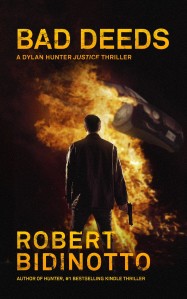
I’ve said it before, but let me repeat once again just how grateful I am to you readers for your enthusiasm and encouragement. In fact, the biggest pressure I feel right now is to craft sequels that live up to your highest expectations. I’m at work on the first of those, titled BAD DEEDS. I hope to have it out by Christmas; but rest assured that I won’t release it until I’m satisfied that it’s the best that I can do. That’s what you deserve.

Thanks again for all your kind words and generous support. I appreciate it more than I can tell you.

Posted in Announcements, Biographical, HUNTER: A Thriller, Self-Publishing | Tagged , , , , , , , , , , , , , , | 15 Comments

Interview with Suspense Author Joe Badal


Joseph Badal has worked for thirty-eight years in the banking and financial services industries. He is currently President of Joseph Badal & Associates, Inc., a consulting firm.

Prior to his finance career, Joe served as a commissioned officer in the U.S. Army in critical, highly classified positions in the U.S. and overseas, including tours of duty in Greece and Vietnam. He earned numerous military decorations.

He holds undergraduate and graduate degrees in International Finance and Business Administration and is multilingual. He has written dozens of articles that have been published in various business and trade journals, and is a frequent speaker at business and writers events.

Joe has drawn upon his military and financial-industry background to write his high-octane suspense novels: The Pythagorean Solution, Evil Deeds, Terror Cell, and The Nostradamus Secret. Published in June, his latest book — a thriller set in the financial and banking industries — is Shell Game.

You can follow Joe on his blog, titled Everyday Heroes.

***

The Vigilante Author: Congratulations on your most recent thriller, Joe. What’s it all about?

Joe Badal: Shell Game tells the story of a family whose business is threatened with failure due to a corrupt Federal banking regulator and his sociopathic vulture investor partner. It is inspired by actual events and heavy-handed policies imposed by the U.S. government since the capital markets meltdown and banking crisis that began in 2007, and continues through today.

The Vigilante Author: As I am a lifelong opponent of governmental manipulation of private business, your book’s theme sounds like music to my ears. What about your previous novel?

Joe Badal: All of my previous books are thrillers with an international orientation. Evil Deeds is based on the attempted kidnapping of our son in Greece when we were stationed there with the U.S. Army. It is the first in the Bob Danforth series, which includes Terror Cell and The Nostradamus Secret.

Danforth, the head of CIA Special Operations, is an everyday hero — not a superhero — who rises to the occasion whenever confronted by a challenge. The book covers the period from 1971 (the time of the kidnapping) to 1999 (the war in the Balkans).

The Vigilante Author: Your history in the military and financial-services industry has certainly given you the credentials to write good international thrillers. And the attempted kidnapping of your own son must have given you a lot of initial motivation! About that: What, exactly, prompted you to become an author?

Continue reading

Posted in Author profiles, Biographical, Inspirational, Interviews, Writing Advice | Tagged , , , , , , , | 2 Comments

A Vital Tip for Self-Publishing Authors


Lately, I’ve been sharing tips on self-publishing with quite a few authors, online and in person. Most of it is “how-to” stuff. But some of it concerns the attitude that an indie author must maintain if he is to be successful.

And of all the “attitudinal” advice that I could give to authors who have embarked on the path to self-publishing, here’s one tip that I can’t emphasize strongly enough:

Be patient!

Indie publishing works opposite from everything that authors have come to expect from traditional publishers.

In legacy publishing, all success occurs as a result of “the big splash” of publicity on the book’s release date. That’s because the book has only 6-8 weeks shelf life in a bookstore to find its audience, after which it typically is pulled from the shelves, remaindered, or sent back to the publishers to be pulped. And within a year, it goes “out of print” and is gone, usually forever.

Look familiar?

That tight time span has generated a frantic, desperate mindset in writers: They believe that success must come immediately, or their book has failed forever. So, when they turn to self-publishing, it is hard for them to stop thinking in those terms. They can’t quite grasp that indie sales do not depend on “the big splash”; they rely instead on “the long tail.”

This means: After its initial release, sales are usually minimal; they build slowly, over a long period of time—months or even several years—growing largely by word-of-mouth recommendations from one reader to others.

Put another way: Traditional publishing is a sprint; indie publishing is a marathon.

As an indie author, you have to think like a marathoner: slow, steady, and PATIENT. Your goal is to build a loyal fan base of repeat customers over time. Each new book you publish will add new people to that fan base—and it also will boost the sales of your previous books, too, as those new fans go back and buy your earlier titles. Some now-hugely-successful indie authors are finding that books they published years ago, and which never sold much, are suddenly popping up onto bestseller lists.

In my case, sales of my debut thriller, HUNTER, started off well on June 21, 2011—but within days, they fell, and they tanked over the July 4th weekend. Then they began to creep up. After a few weeks, they plateaued at a steady level that lasted months, bouncing up and down a bit, but within a decent range. In late November, though, Amazon named HUNTER an “editors’ pick,” and sales skyrocketed overnight. When their promo ended, sales began to trail off on a slow downward arc. Even so, they remained stellar throughout January 2012, very good during February…but then returned to their pre-promotional levels during March through May.

This June, sales of HUNTER, though still respectable, have declined to a level lower than any since its first month of publication. But am I worried? No, because I know that they will continue to bounce around, depending on quirks of publicity. And I also know that they’ll probably shoot right back up again after I release my next book, since I now have many loyal fans who are eager to read the sequel.

So, you really, really must be patient. Don’t worry about slow launches, and don’t fixate on daily or weekly sales statistics. Sales numbers bounce around all over the place, and they rarely indicate any “trend.” Besides, “sales trends” don’t really mean much anymore, because as self-publishing guru Joe Konrath points out, “ebooks are forever.” (The same applies to “print-on-demand” books.) They are never “yanked off the shelves” or “go out of print.” They have years to find their audience.

Look familiar, too?

It’s a slow, erratic process. But that’s how it works. If you proceed with that as your expectation, you won’t make yourself a nervous wreck by staring constantly at the sales charts and thinking that you have to DO SOMETHING RIGHT NOW to boost sales.

No, you don’t.

Just relax. You’re in a marathon. It doesn’t matter to a marathoner what “position” (ranking) he’s in during the opening stages of the race, when he’s lost in the crowd of runners. It’s a matter of maintaining a steady pace, of doing smart things along the way, and of positioning himself for surges much later. That is how you have to think about this.

There’s another reason to take your time: You don’t want to rush something into publication, only to spend weeks trying to undo mistakes and messes that easily could have been avoided. I’ve met a number of authors who have jumped into this hastily, without researching the options, with ill-prepared manuscripts, indifferent editing, poor covers, lousy promo copy on their Amazon page, no advance reviews, no marketing plan, no blog or website in place, no Facebook or Twitter presence…and, not surprisingly, they’ve seen no sales. It’s a shame, because some of their books are decent. They deserved better.

And so do you.

So try to enjoy the marathon. It’s an adventure of self-expression, and you get to meet some wonderful people along the way: talented fellow authors and avid, loyal readers.

Good luck to you, my fellow scribe. And above all: Keep writing!

Posted in Biographical, Book business, HUNTER: A Thriller, Marketing Advice, Publishing Advice, Self-Publishing, Traditional publishing | Tagged , , , , , , , , , , , , , , , | 5 Comments