Photos by Brian Killigrew
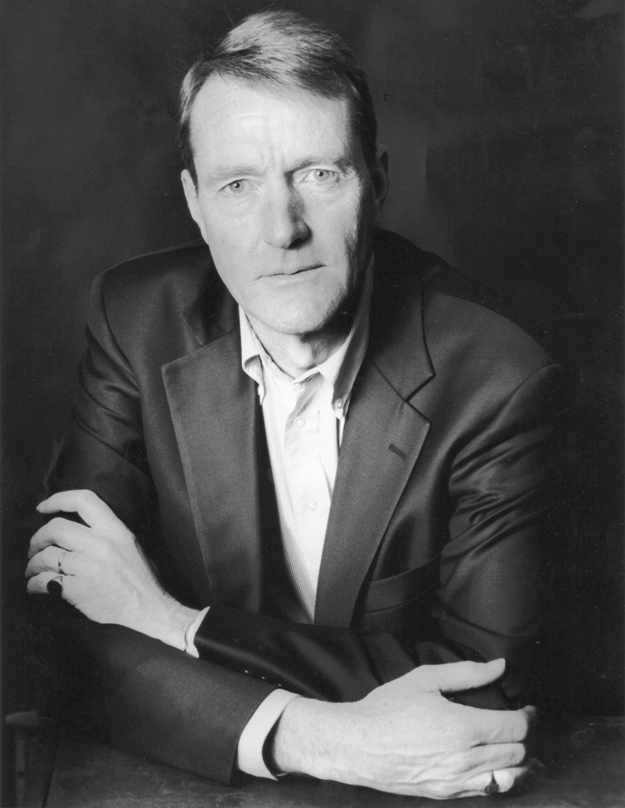
Portrait of Lee Child by Brian Killigrew
Lee Child is the bestselling author of what Publisher’s Weekly calls “arguably today’s finest thriller series.” Its huge, and hugely popular, protagonist—a giant, incorruptible drifter named Jack Reacher—has been dubbed “the thinking reader’s action hero.” A former U.S. military policeman, Reacher is a modern knight errant—an indomitable force for the good in a morally blighted world. And his creator is an eloquent, unapologetic champion for the same ideals.
Born in England in 1954—real name James Grant—Lee grew up on the tough streets of Birmingham. He took his childhood love of fiction into a 20–year career as a presentation director for Granada Television. But when industry downsizing led to a major layoff, his career came to an abrupt halt in 1995.
At age 40—facing joblessness, broke, with a family to feed, yet supremely confident—Child did the unthinkable. Rather than seek a new job, he sat down to write a novel in longhand. The result was a gripping thriller, Killing Floor, that won awards, rave reviews, and the first of millions of avid fans who now call themselves “Reacher Creatures.”
Fifteen novels have followed, most with terse, edgy titles: Die Trying, Tripwire, Running Blind, Echo Burning, Without Fail, Persuader, The Enemy, One Shot, The Hard Way, Bad Luck and Trouble, Nothing to Lose, Gone Tomorrow, 61 Hours, Worth Dying For, and, just released this fall, The Affair—yet another #1 New York Times bestseller. Meanwhile, One Shot is headed to the big screen, the first in what the author hopes will become a successful Jack Reacher film franchise.
Child now lives the good life with his wife in Manhattan and in the south of France. Between novels, he reads, smokes, drinks coffee, listens to music, and watches the Yankees—all addictively. Tall, slim, with sky-blue eyes and a keen intellect, he clearly has exported much of himself into the Reacher character.
On May 1, 2007, Lee Child sat down with me and photographer Brian Killigrew at Partners & Crime Mystery Booksellers in New York City, and later at Da Umberto Restaurant, for a wide-ranging, captivating, and inspiring interview. It was first published in the July/August 2007 issue of The New Individualist, a magazine that I edited at the time. It’s reprinted here with the permission of the magazine and its publisher, The Atlas Society.
Thanks to Lee and to his publicist, Maggie Griffin–who is also proprietor of Partners & Crime Mystery Booksellers–for their generous gifts of time, space, and captivating conversation.
(Note: If you click on the photos, you may get an expanded view of them on your browser.)
~*~
“For a so-called noir or hard-boiled writer, my books aren’t really very gray. There are good guys and bad guys, and the good guys win—count on it.”
—Lee Child
The Vigilante Author: I love a quotation from one of your previous interviews about how in your books, the good guys always win.
Lee Child: Well, that quotation was referring partly to the genre descriptions that we’re all saddled with. The retail trade is always keen on specifying exactly what kind of book it is. Is it a mystery, is it suspense, is it crime fiction, is it hard-boiled, is it noir? Most of those genres involve a certain amount of grayness. Typically, hard-boiled fiction is about bad things happening to bad people. Crime fiction is about the effect of a crime on a family or a community.
I’m not really into that at all. My books are straightforward, old-fashioned adventures where there is a clear-cut, binary choice: You are either with the hero or against him, and that determines your fate. And Jack Reacher will never lose, and he will never be gray in any way.

 Photo (c) by Debbie Scott